
Homes That Age Beautifully: Finishes That Never Go Out of Style


There are homes that look expensive when they're new and ones that hold that feeling ten years later. The homes that do both have something in common: the materials inside them were chosen with the long game in mind.
I've walked through enough homes in Phoenix to know the difference immediately. The finishes either have depth and character, or they show their age...in the wrong way. This post is about the materials that only get better over time, why they're worth the investment, and what they signal about a home when it comes time to sell.
What Does "Ages Beautifully" Actually Mean in Real Estate?
When designers and agents talk about materials that age well, they're talking about patina. Natural wear that adds character rather than subtracting value. The opposite of this is a finish that chips, yellows, scratches visibly, or goes out of style so fast it dates the entire space.
Trends in home design are cyclical. What's "in" right now has almost certainly been in before, and it'll come back around again. The homes that feel timeless aren't chasing what's trending they're built around materials that have been used for centuries because they hold up, look better with use, and photograph well in every era.
That's the framework I use when I'm advising buyers on what to look for and what to overlook, and it's the same framework sellers should be thinking about before making any pre-listing renovation decisions.
Travertine

If you want to understand why travertine belongs in a desert luxury home, just look at where it comes from. It's a natural limestone formed by mineral springs: porous, warm-toned, and about as suited to the Arizona climate aesthetically as any material on the market.
Travertine floors and wall cladding have been used in architecture for thousands of years. The Colosseum in Rome is partially built from it. That alone should tell you something about its staying power. In Scottsdale and Paradise Valley homes, travertine shows up in a few different ways. Large-format floors, outdoor patios and pool surrounds, shower walls, and feature walls in great rooms. The reason it works so well here is the color palette. The creams, walnuts, and golds read naturally against desert landscaping and pair well with the warm wood tones that define a lot of high-end Arizona interiors.
What makes travertine different from porcelain tile trying to mimic it is the variation. No two slabs are the same. The natural pitting and veining get more interesting over time, not less. Properly sealed and maintained, travertine floors in a well-designed home add perceivable value, buyers notice and they respond to it.
One thing worth knowing: travertine does require sealing and some ongoing care. It's not a set-it-and-forget-it material. But the homes that are maintained well show it, and the resale data reflects it.
Unlacquered Brass
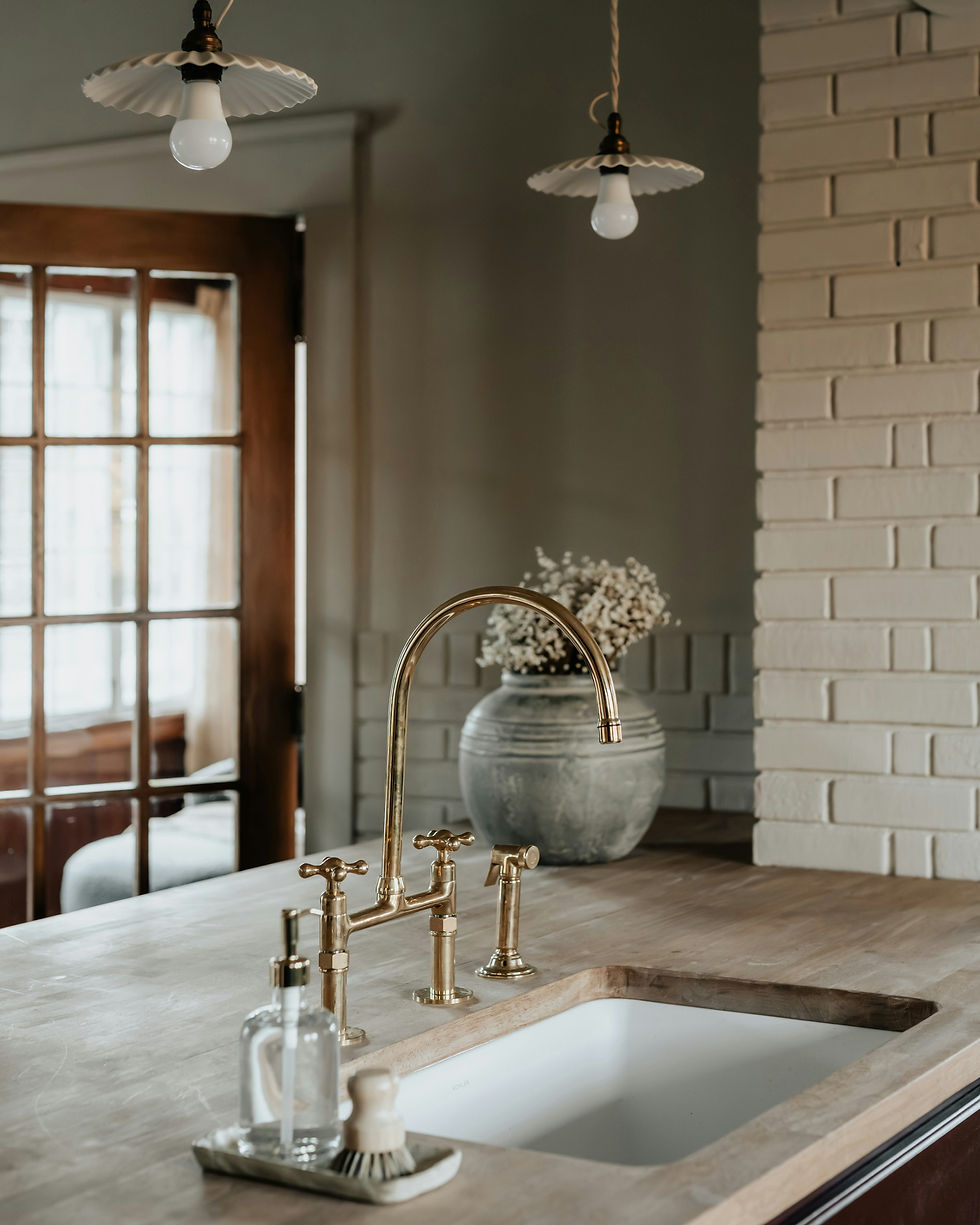
Unlacquered brass is having a moment right now. It was having a moment in the 1970s too, and before that, and it'll be having one again in twenty years. That's exactly why it belongs in this conversation.
The difference between unlacquered brass and the polished or satin brass finishes that felt dated in the 90s is the living finish. Unlacquered brass is left without a protective coating, so it oxidizes naturally over time. It develops a darker, richer patina in areas that get the most contact and stays slightly brighter where it's handled less. The result looks curated and layered in a way that brand-new polished metal never does.
In kitchen and bath design, this shows up in faucets, cabinet hardware, light fixtures, and towel bars. When it's done well, paired with natural stone, plaster walls, or warm-toned cabinetry, it reads as intentional and elevated. It looks like something out of a AD feature. That aesthetic has been all over shelter media for the past few years for a reason.
For buyers who are designing or looking to purchase a home with a high-design finish level, unlacquered brass hardware and plumbing fixtures are often non-negotiables. And because the patina is unique to each home and each user, there's a personalization element to it that no factory finish can replicate.
If you're a seller who's updating fixtures before listing, this is one of the swaps worth considering. It doesn't require a full renovation and new hardware on existing cabinetry can shift the entire feel of a kitchen.
White Oak

White oak is one of those materials that shows up in homes built in the 1960s, in spec homes going up right now, and in everything in between, and somehow it looks right in all of them.
The grain of white oak is tighter and more consistent than red oak, which gives it a cleaner look when used in flooring, cabinetry, and millwork. It takes stain well but honestly looks best in its natural or lightly wire-brushed state, which is why you see so much of it in the current wave of California-influenced luxury homes making their way into the Phoenix market.
White oak flooring holds up to foot traffic better than softer woods. Over time, it develops a natural warmth that engineered wood or luxury vinyl plank simply can't replicate. For buyers asking "what flooring holds up best in a luxury home" white oak is consistently the answer designers and high-end builders give.
In cabinetry, white oak with a natural or cerused finish pairs effortlessly with the stone countertops and brass or matte black hardware that dominate current luxury kitchen design. It also photographs beautifully, which matters more than most people realize.
Honorable Mentions
Honed marble: Develops a soft, matte surface over time that looks more intentional than polished marble ever does. It's less slippery, shows fewer scratches, and gets better with age rather than looking worn.
Plaster walls: Smooth or textured, have made a real comeback in high-end Arizona new builds and renovations. Unlike drywall with paint, plaster walls have depth. They reflect light differently throughout the day and hold up to the heat cycles of a desert climate better than most people expect.
Concrete: Develops micro-variations over time that give it a hand-crafted quality. In the right design context, it's one of the most sophisticated material choices available when done right.
Solid wood doors and steel-framed windows also belong on this list. These are areas where buyers often see cost and hesitate, but the homes that have them versus the ones that don't are not remotely comparable in feel or resale appeal.
What This Means for Buyers
If you're shopping in the $1M to $2.5M range in Phoenix or Scottsdale and you're evaluating homes side by side, pay attention to the material story. A home with travertine floors, unlacquered brass fixtures, and white oak millwork is not just more beautiful but more defensible as an investment.
Trends in home design come and go, but the homes built around quality natural materials tend to hold their value and desirability across market cycles. That's just what the data shows and what experienced buyers understand.
If you haven't already, check out my Buyer's Guide for a full breakdown of what to look for and what to avoid when evaluating homes in the Phoenix market. I also broke down open vs. closed floor plans in a recent post that's worth reading before you start touring homes.
What This Means for Sellers
If you're thinking about selling, my Seller's Guide is a good place to start before we talk. A pre-listing consultation is something I do with every seller I work with, and a significant part of that conversation is about where to invest (and where not to). If your home has some of these materials already, that's a story we tell in the marketing. If it doesn't, there are targeted, high-return updates worth considering.
Carlos Moreno is a licensed Real Estate Advisor based in Phoenix, Arizona, US. He works with buyers, sellers, and relocation clients looking to make a move in one of the most desirable regions in the country.


