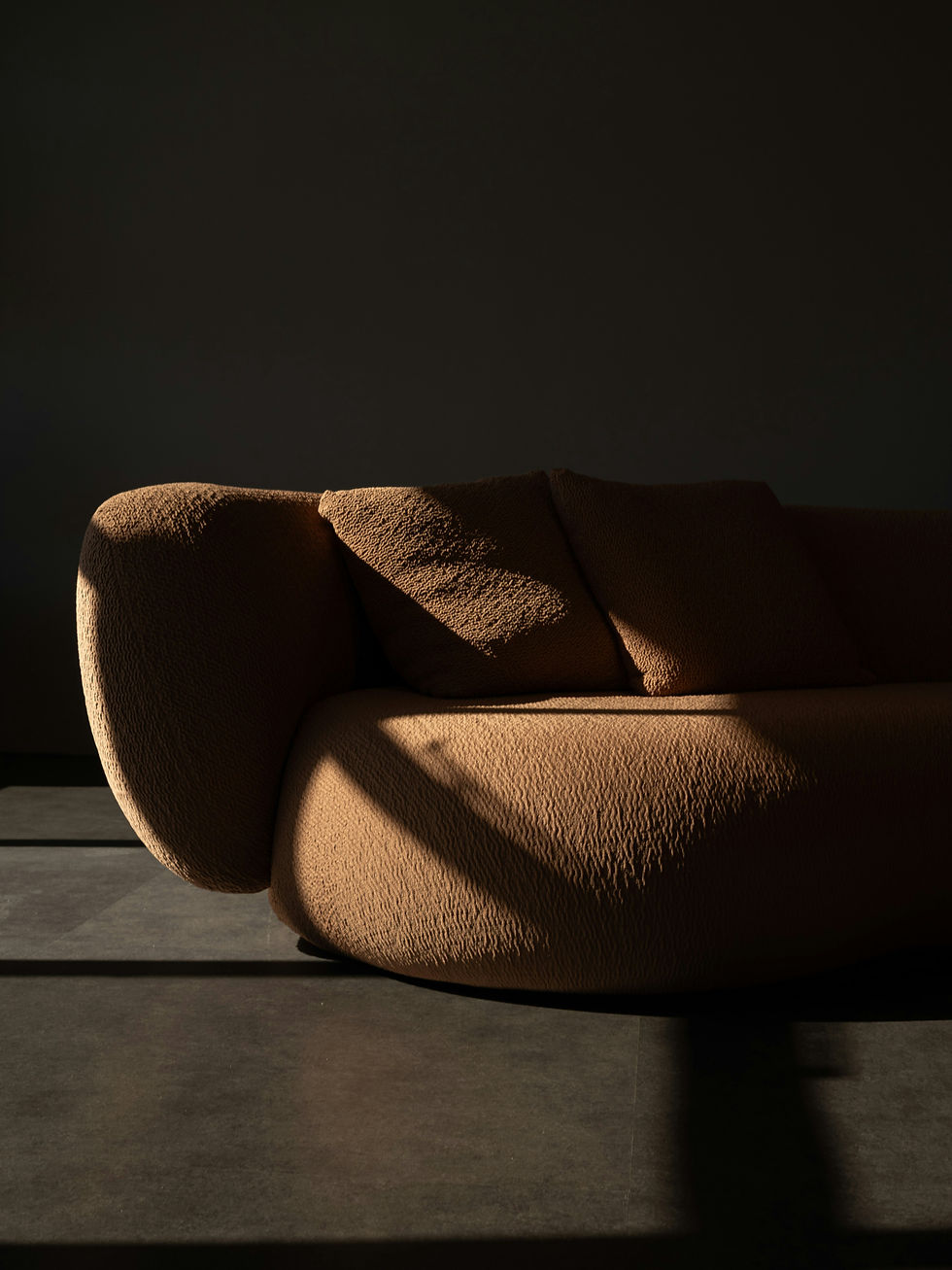
What Staging a Home Does to a Buyer's Brain + Why Smart Sellers Invest in It

Updated: Jul 27
There's a moment that happens at almost every open house or showing. A buyer walks through the front door, takes about thirty seconds to scan the room, and has already formed an opinion. Not about the square footage, or the roof age, or the HVAC...but about how the home feels. Whether they can picture their life inside of it.
That moment is the entire game and staging is how you can control it.
The Psychology of a Staged Home

Buyers will always make emotional decisions first and logical ones second. As much as you try not to, it's human nature to do so and they'll justify a purchase price with comps and square footage later. In the moment of a showing, what's driving them is pure feeling. Do I feel relaxed here? Do I feel like I belong here? Does this feel like the life I want?
Professional staging is designed to manufacture exactly that feeling. It's not decorating or organizing existing belongings, it's a strategic way of storytelling told through furniture scale, sight lines, lighting, and texture. A well staged home communicates abundance without excess, space without emptiness, and warmth without clutter. Buyers don't walk out thinking "that was beautifully staged." They walk out thinking "I really loved that house." and that's the whole point.
Studies have consistently shown that staged homes sell faster and closer to (or above) asking price than their non-staged competitors. In competitive markets like Phoenix and Scottsdale, where buyers at higher price points are often choosing between several well appointed homes, staging is frequently the difference between a quick, clean offer and a property that sits. Want more insider knowledge? Download my free Seller's Guide Here → Seller's Guide
Does Staging a Home Really Increase Sale Price?
This is one of the most common questions sellers ask, and the honest answer is yes, when done well. The National Association of Realtors has reported that a significant percentage of buyers' agents say staging affects what their clients are willing to offer. In luxury real estate specifically, buyers expect a certain level of presentation. If a home doesn't meet that expectation visually, it creates doubt. And doubt is expensive.
Here's the perspective I give my sellers: staging isn't a cost, it's a protection on your net. If your home sits on the market for an extra 45 days because it didn't photograph well or didn't show well, you've almost certainly lost more money in price reductions and carrying costs than staging ever would have cost you. Pay at close options exist for exactly this reason. You don't have to come out of pocket before the sale. The investment rolls into closing, and in most cases, the return justifies it by a wide enough margin. If you're curious about other smart pre-listing investments, read about how to prep your home for a successful sale here.
What Buyers in the Phoenix Market Respond To
The Phoenix and Scottsdale luxury market has its own personality. Buyers here are drawn to indoor-outdoor living, natural light, clean "desert-modern" aesthetic, and spaces that feel livable. The staging that works in a Chicago brownstone doesn't necessarily translate here.
Great staging in this market tends to lean into organic textures, lighter palettes that work with the desert light, and furniture that emphasizes the flow between interior and exterior spaces. A staging team that understands this market needs to speak directly to what a Phoenix buyer is already hoping to see when they walk through the door.
This is also why who you work with matters. A generalist stager and a stager with real experience in your market will produce meaningfully different results. The same goes for the agent guiding those decisions.
Vacant Homes Are the Highest-Risk Listings

If there's one situation where staging becomes less of a nice-to-have and more of a necessity, it's a vacant home. Empty rooms are deceptive. They can look smaller in photos, feel colder in person, and give buyers nothing to emotionally anchor to. Without furniture, buyers start noticing every scuff, every echo, every imperfection. They lose the ability to visualize scale.
A bedroom that would feel generous with a king bed and two nightstands suddenly feels ambiguous when it's completely empty. For vacant listings in the higher range, full staging is almost always the right call. The difference in listing photography alone is worth it. And in a market where buyers are frequently relocating from out of state and making decisions based heavily on online listings before they ever step foot in Arizona, those photos matter more than most sellers realize.
How Photography and Staging Working Together
Speaking of photos, staging and photography are two sides of the same coin. You can stage a home beautifully and still undersell it with mediocre photography. The goal is to create a listing that stops someone mid-scroll, makes them save it, send it to their partner, and book a showing.
That combination of thoughtful staging and high-quality photography is what separates listings that generate urgency from listings that generate passive interest. In the Phoenix and Scottsdale market, urgency is what gets you multiple offers and a strong close.
The Bottom Line
If you're preparing to sell a home and you're weighing whether staging is worth it, here's what you need to walk away knowing: the cost of staging is almost always smaller than the cost of not staging. The math works, the psychology works, and in a market where buyers have options and high expectations, presentation is one of the very few things you have complete control over.
If you're thinking about listing your home and want a straight conversation about what it takes to position it well in today's market, I'd love to connect. No pitch, no pressure. Just an honest conversation about what your home is worth and how to get there → Let's Talk About Your Listing
And if you're still in the early research phase, this Seller's Guide is a good place to start.
Carlos Moreno is a licensed Real Estate Advisor based in Phoenix, Arizona, US. He works with buyers, sellers, and relocation clients looking to make a move in one of the most desirable regions in the country.